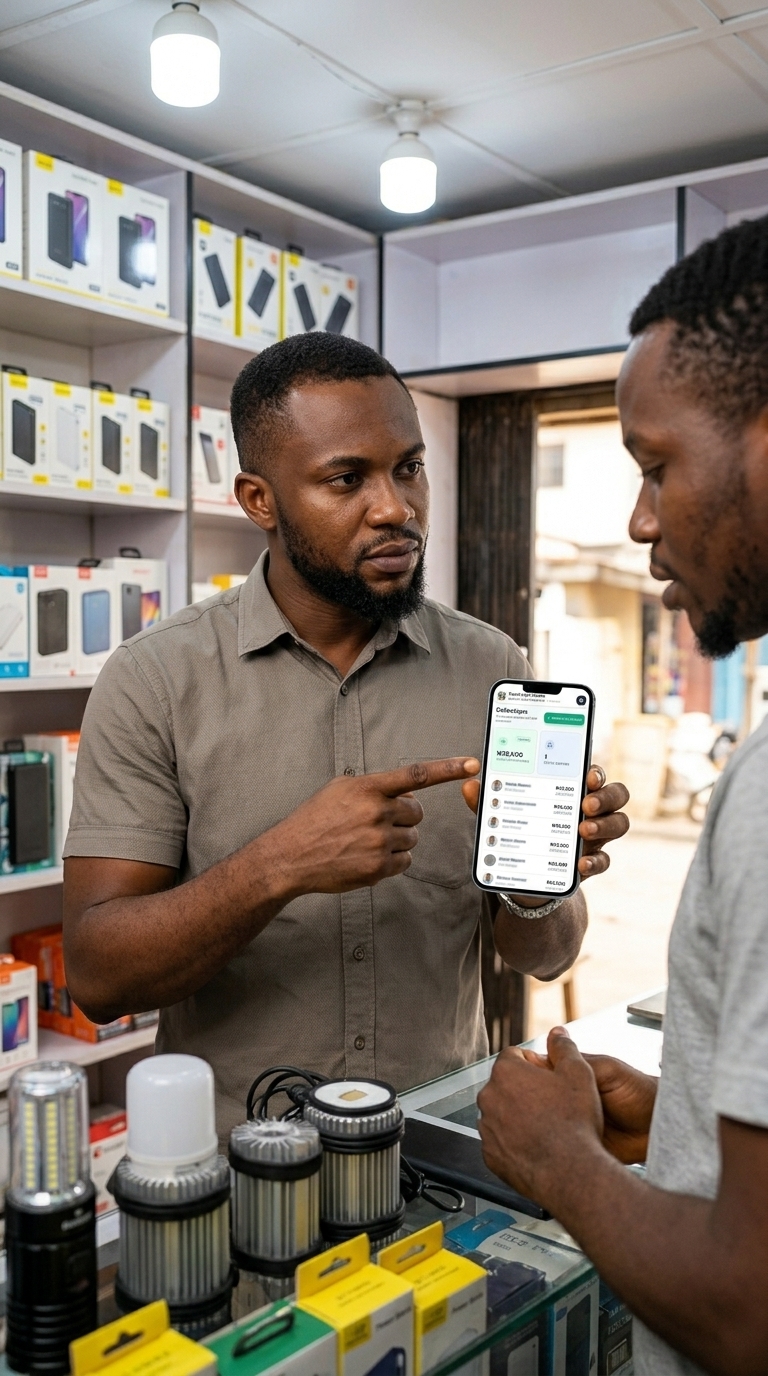
"Buy Now, Pay Later" Is Normal in Nigerian Retail — Tracking It Isn't
Extending credit to regular customers is how a lot of Nigerian retail actually works — a trusted customer takes goods today and pays on their next salary, or when their own customers pay them. The business relationship depends on it. What most shops don't have is a reliable way to track who owes what, how much, and since when — so debts get forgotten, disputed, or quietly written off simply because nobody wrote them down properly in the first place.
Pocket Shop Manager's debt tracker turns every credit sale into a permanent, searchable record automatically — no exercise book required, and nothing depends on anyone's memory.
How a Debt Record Gets Created
Debt tracking isn't a separate step you have to remember — it's built into the normal sales flow. When you record a sale and the customer isn't paying immediately, you simply select "Owing" as the payment status instead of "Paid." The app then asks for the customer's name, phone number, and an optional due date (defaulting to 7 days if left blank), and a debt record is created automatically, linked to that exact sale.
For debts that predate using the app — a customer who already owed you before you started using PSM — you can add a debt manually from the Debts tab, entering the amount, description, and due date directly.
Three Tabs That Keep Everything Organised
Pending
Every unpaid debt, oldest first, so overdue balances are easy to spot at a glance.
Paid
Settled debts with the exact date and time they were paid.
Customers
Every customer who's ever owed you, with their running outstanding balance.
Recording Part Payments, Not Just Full Settlements
Real life doesn't always pay debts off in one lump sum. When a customer pays part of what they owe, tap "Log Part Payment" and enter the amount received — the debt stays in Pending with an updated, accurate outstanding balance, and the partial payment is added to that customer's history. When they clear the balance completely, tap "Mark as Paid" and it moves to the Paid tab automatically.
WhatsApp Reminders Without the Awkward Phone Call
This requires the customer's phone number to be on file, which is exactly why collecting it at the point of sale matters — it's the difference between a polite automated nudge and having to track someone down in person.
Your Customer Directory, Built In
Every customer who's ever owed you money is saved automatically to a searchable directory. Tap any name to see their complete history — every debt, every payment, paid and unpaid, with dates and amounts — so you can make an informed decision the next time they ask for credit, instead of guessing based on memory or gut feeling.
Why Paper-Based Debt Tracking Fails Eventually
An exercise book works fine until it doesn't — a page goes missing, handwriting becomes illegible, or the book itself gets lost along with weeks of records. Worse, there's no way to quickly see which debts are overdue versus which were just created yesterday; everything blends together on the page. A digital debt tracker sorts pending debts oldest-first automatically, so the customer who's owed you money for six weeks is never buried under yesterday's entries.
Protecting the Relationship, Not Just the Money
Chasing a debt badly can cost you a customer even when you're right to ask for payment. A calm, professional, pre-written WhatsApp reminder does the same job as an awkward phone call or an in-person confrontation — without putting either side in an uncomfortable position. That's the real value of automating this part of running a shop: the money gets tracked accurately, and the relationship stays intact.
Frequently Asked Questions

Ready to Run Your Shop From Your Pocket?
Join the first 10,000 Nigerian shop owners locking in lifetime Pro access for a one-time ₦10,000 — before pricing moves to a subscription.
🏆 Get Pocket Shop Manager on Google Play